Expert Guide to Modern Water Heaters: Efficiency, Comfort, and Smart Convenience
Mode rn water heaters are doing more than just giving you hot water when you need it. These days, they’re designed to save energy, make life more comfortable, cut down on maintenance hassles, and meet the needs of both busy households and commercial properties. If you're on the fence about upgrading, let's break down the latest trends, real efficiency gains, and the benefits that really matter to you as a homeowner or property manager.
For property owners weighing their options, the main takeaway is pretty straightforward: the right system can cut your utility bills and boost performance. Whether you're thinking about switching to a tankless water heater, planning for a water heater replacement, or trying to keep your current unit running smoothly with water heater repair, modern technology gives you more flexibility than the older models. In Los Angeles, where hard water and higher energy costs are common, these upgrades can make a big difference.
A big shift in the industry is the push for higher efficiency standards. The U.S. Department of Energy keeps raising the bar for water heating equipment, and the market is responding with better designs, smarter controls, and more efficient heating methods. You can see what the federal government has to say about water heating and energy use by checking out the U.S. Department of Energy, which explains why water heating is one of the biggest energy expenses in a typical home.
Why Modern Water Heaters Matter More Than Ever
Water heating is a major energy cost.
Water heating is responsible for about 18% of a typical home's energy use, making it a big factor in your utility bills. This is why efficiency is so important. When a water heater runs every day, even small improvements can add up, especially in homes with multiple bathrooms, large families, or frequent hot water use.
Older systems waste energy in a couple of common ways: they lose heat while storing water, and they often run on outdated controls that can't adapt to changing usage patterns. New systems solve these problems with better insulation, improved ignition systems, and smarter operation. This means less wasted energy and more reliable hot water when you need it.
Convenience is now part of the equation.
While efficiency used to be the main reason people upgraded, now convenience is just as important. Many homeowners want endless or almost endless hot water, faster recovery after heavy use, and equipment that doesn't take up much room. Modern water heaters can deliver all three, making them a great fit for homes where comfort and space are priorities.
Convenience also includes easier diagnostics, improved safety features, and more predictable performance. Some systems can even hook up to smart home monitoring tools, giving you better insight into your usage and potential problems. For families that rely heavily on daily hot water, this kind of control can really improve quality of life.
The Biggest Modern Water Heater Trends
High-efficiency condensing technology
Condensing water heaters are a major development in the industry. Instead of letting exhaust heat escape, these systems capture more of that heat and recycle it to improve efficiency. This approach cuts down on fuel consumption and helps you get more hot water from less energy.
Industry reports show that high-efficiency condensing equipment is becoming the new standard in many applications. According to the International Code Council, federal rules are steering the market towards condensing technologies, especially in commercial gas water heating. For plumbing pros, this means understanding venting, condensate management, and installation requirements is now essential.
Heat pump water heaters
Heat pump water heaters are gaining popularity because they use electricity much more efficiently than standard electric resistance units. Instead of generating heat directly, they move heat from the surrounding air into the water tank. This process can use three to four times less electricity than a traditional electric water heater, which is why many homeowners see significant annual savings.
These systems are especially appealing in homes where there's enough surrounding air space for the unit to work effectively. They also pair well with rebate programs and energy-saving incentives in many regions. For a deeper look, check the Department of Energy’s guide to heat pump water heaters, which explains how they work and why they're considered one of the most efficient residential options.
Tankless water heaters
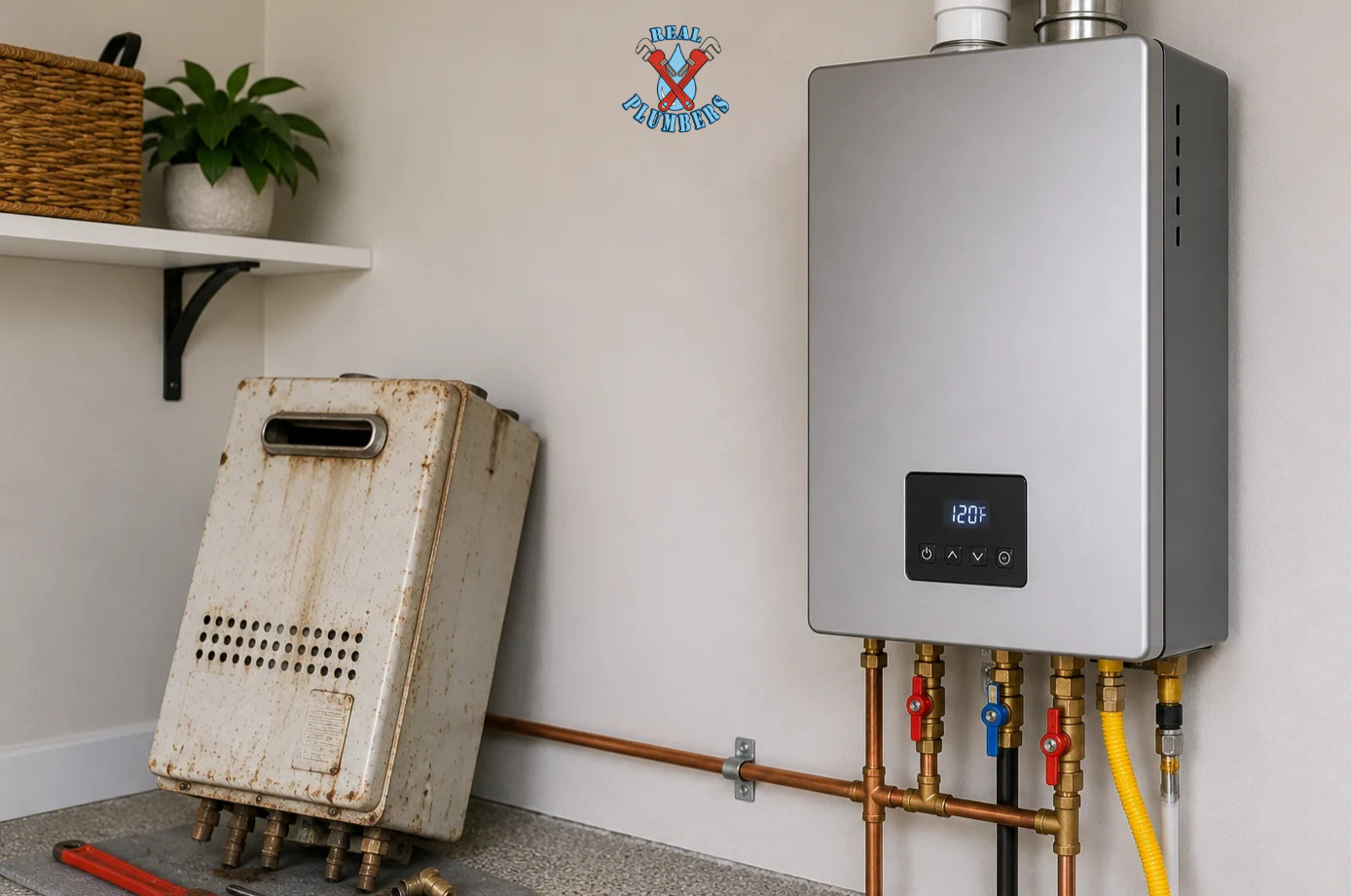
Tankless systems are becoming more popular because they heat water only when you need it. This eliminates standby heat loss, which is a big weakness of traditional storage tanks. For smaller households or homes with lower hot water needs, the result can be both energy savings and better use of space.
The market has grown because tankless systems offer long service life and strong performance when sized correctly. They're often a smart choice for homeowners who want a cleaner mechanical footprint, especially in areas where utility closets, garages, or service areas are tight. If you're thinking about an upgrade, tankless water heater replacement can be a great way to boost performance while modernizing the system.
Efficiency Benefits Homeowners Can Actually Feel
Lower utility bills over time
The most obvious benefit of modern water heaters is lower energy use, which usually means lower bills. Heat pump water heaters excel in this area, but condensing and tankless models can reduce waste significantly compared to aging tanks. Over several years, those savings can offset a big chunk of the installation cost.
Another advantage is consistency. A poorly performing old heater may cycle inefficiently, lose temperature quickly, or need repeated reheating. Newer systems are better at matching output to demand, so they don't have to work as hard to keep water hot. This steady operation reduces wear and can also improve reliability.
Better recovery and performance during peak use
Modern water heaters are built to handle the way people actually use hot water today. Families often run showers, dishwashers, laundry, and sinks within the same morning window. A newer unit with stronger recovery or on-demand heating can keep up with that demand much better than an older tank with limited capacity.
This matters not just for comfort, but for your daily routine. When hot water is available consistently, there are fewer interruptions and complaints. That's why many homeowners choose to upgrade before a system fails, rather than waiting for emergency service.
Smarter control and better diagnostics
Many modern units offer improved digital controls, temperature monitoring, and error reporting. This makes it easier to spot issues before they turn into major repairs. In some cases, a plumber can identify a problem faster because the system gives clearer information about ignition failures, sensor faults, or heating interruptions.
For owners, that means fewer surprises. Instead of wondering why the water is lukewarm or why a system is cycling strangely, you get more visibility into what's happening. That can make maintenance easier and reduce the chances of a sudden breakdown.
Why Plumbing Professionals Are Essential to the Process
Correct sizing and system selection
The best water heater isn't just the most efficient one; it's the one that fits your property. A professional plumber can calculate household demand, look at existing gas or electrical capacity, and recommend a system that delivers the right balance of performance and cost. Oversizing or undersizing a unit can lead to wasted energy or disappointing hot water output.
This is where experienced plumbing service becomes valuable. At Real Plumbers, we often help customers compare options based on usage patterns, available space, and long-term maintenance needs. If a home is due for an upgrade, the right installation plan can be just as important as the product itself.
Installation details affect long-term efficiency.
Modern water heaters often require more precise installation than older equipment. Proper venting, condensate drainage, pressure relief, combustion air, and temperature settings all matter. If any one of these elements is done incorrectly, the system may not perform as intended.
That's also why homeowners should be cautious about DIY replacement on complex systems. Even small installation mistakes can shorten service life or create safety concerns. A licensed plumber can confirm that the unit is installed to code and configured for safe, efficient operation.
Maintenance keeps efficiency from slipping.
Even the most advanced water heater will lose performance if it’s neglected. Annual flushing is especially important for tank-style systems in hard water areas because sediment buildup can insulate the heating surface and reduce efficiency. In places like Los Angeles, where mineral content in water can be an issue, this maintenance step is particularly important.
For homeowners who want to understand the local maintenance angle, the California Energy Commission has published research showing how water-heating strategies can affect energy use in Los Angeles County. While the study focuses on solar systems, it reinforces a broader point: water heating choices have real energy consequences at the community level.
Common Questions About Modern Water Heaters
How long does a modern water heater last?
Service life depends on the type of system, water quality, usage, and maintenance. Traditional tank heaters typically last 8 to 12 years, while tankless models often last 15 to 20 years. Heat pump systems also tend to offer strong lifespan potential when they are maintained properly.
This range matters because lifespan affects total ownership cost. A less expensive unit that fails sooner may not be the best value over time, especially if repeated repairs are needed. If your current heater is aging and showing signs of trouble, it may be more economical to consider repair first and then evaluate whether replacement makes sense soon after.
Are there rebates or incentives available?
Yes, in many cases there are federal, state, or local incentives for upgrading to efficient water-heating equipment. Heat pump water heaters are especially likely to qualify for rebates or tax credits because of their strong energy performance. These programs can significantly improve the payback period for a new unit.
Before purchasing, it's worth checking current program requirements and installation standards. Incentives often depend on the model, efficiency rating, and installer qualifications. If you want to improve performance while also taking advantage of available programs, a professional assessment can help you choose the right path.
Is tankless always better than a tank?
Not necessarily. Tankless water heaters are excellent for space savings and on-demand heating, but they’re not automatically the right choice for every household. Homes with very high simultaneous demand may need careful sizing or multiple units. In addition, installation costs can be higher, especially when venting or gas line upgrades are needed.
For some homes, a high-efficiency tank or heat pump model may provide a better return. The ideal choice depends on household habits, available utility infrastructure, and budget. This is why professional guidance is so important before making a final decision.
Los Angeles Considerations: Hard Water, Space, and Regulations
Hard water and sediment buildup
Homeowners in Los Angeles often deal with hard water, which can lead to mineral buildup inside a tank. Over time, this sediment can reduce heating efficiency, create noise, and strain internal parts. Regular flushing can help, but if buildup becomes severe, replacement may be the smarter long-term solution.
Those who notice popping noises, longer heating times, or inconsistent hot water should pay attention. These are often early signs that sediment is affecting performance. Preventive care can extend the life of a water heater, but only if it's done consistently.
Space-saving solutions matter in urban homes.
Space is another major concern in urban and multi-unit properties. Tankless models and compact high-efficiency systems can free up valuable square footage in closets, garages, and utility areas. For condos, accessory dwelling units, and smaller homes, that can be a major advantage.
When space is limited, installation planning becomes even more important. A plumber can identify whether the property can support a tankless conversion or whether another modern system would be a better fit. In some cases, the best solution isn't the smallest unit, but the one that fits the building’s layout with minimal disruption.
Compliance and future-proofing
Regulations are moving the industry toward greater efficiency, especially for commercial properties. Businesses and property managers should keep an eye on evolving standards so they can plan upgrades before equipment becomes obsolete. Future-proofing now can help avoid rushed replacements later.
This is another area where a knowledgeable plumbing team adds value. Instead of reacting to a sudden failure, property owners can evaluate what's likely to be required next and plan accordingly. That usually leads to better budgeting, less downtime, and improved system reliability.
Real-World Example: Energy-Smart Hot Water in Los Angeles
Community-scale solutions show the potential.
Research into community-scale solar water heating in Los Angeles County suggests that larger-scale water-heating strategies can significantly reduce natural gas consumption. While not every property can adopt solar heating, the study demonstrates a bigger point: local water-heating decisions can have measurable environmental and cost impacts. The more efficient the system, the more those benefits compound.
For individual homeowners, that often means evaluating the practical tradeoffs between initial cost, monthly savings, and maintenance needs. A modern water heater should be chosen not just for today’s price, but for the long-term comfort and efficiency it can provide. That approach is especially relevant in a high-cost energy market.
What a successful upgrade usually looks like
A successful upgrade typically starts with a home evaluation, a review of hot water demand, and a discussion of fuel type, space, and budget. From there, the plumber recommends a system that balances efficiency and convenience. The installation is completed with proper code compliance, followed by testing to verify safe and reliable operation.
After installation, the owner should understand maintenance needs from the beginning. That might include periodic flushing, filter checks, vent inspections, or annual service visits depending on the unit type. When owners stay proactive, modern equipment tends to deliver the greatest return.
How to Decide Whether to Repair or Replace
Signs repair may be enough.
Repair is often the right choice when the issue is isolated, such as a failed thermostat, heating element, valve, or sensor. If the tank itself is still in good shape and the system is not too old, a targeted fix can restore performance without the cost of a new unit. That can be the most practical solution when the heater is otherwise dependable.
Common symptoms like weak hot water, intermittent temperature swings, or unusual noises don't always mean replacement is necessary. A professional diagnosis can separate simple problems from deeper ones. If you're seeing signs of trouble, water pressure regulator repair or related plumbing corrections may also help stabilize system performance when flow issues are part of the problem.
Signs replacement is the better investment.
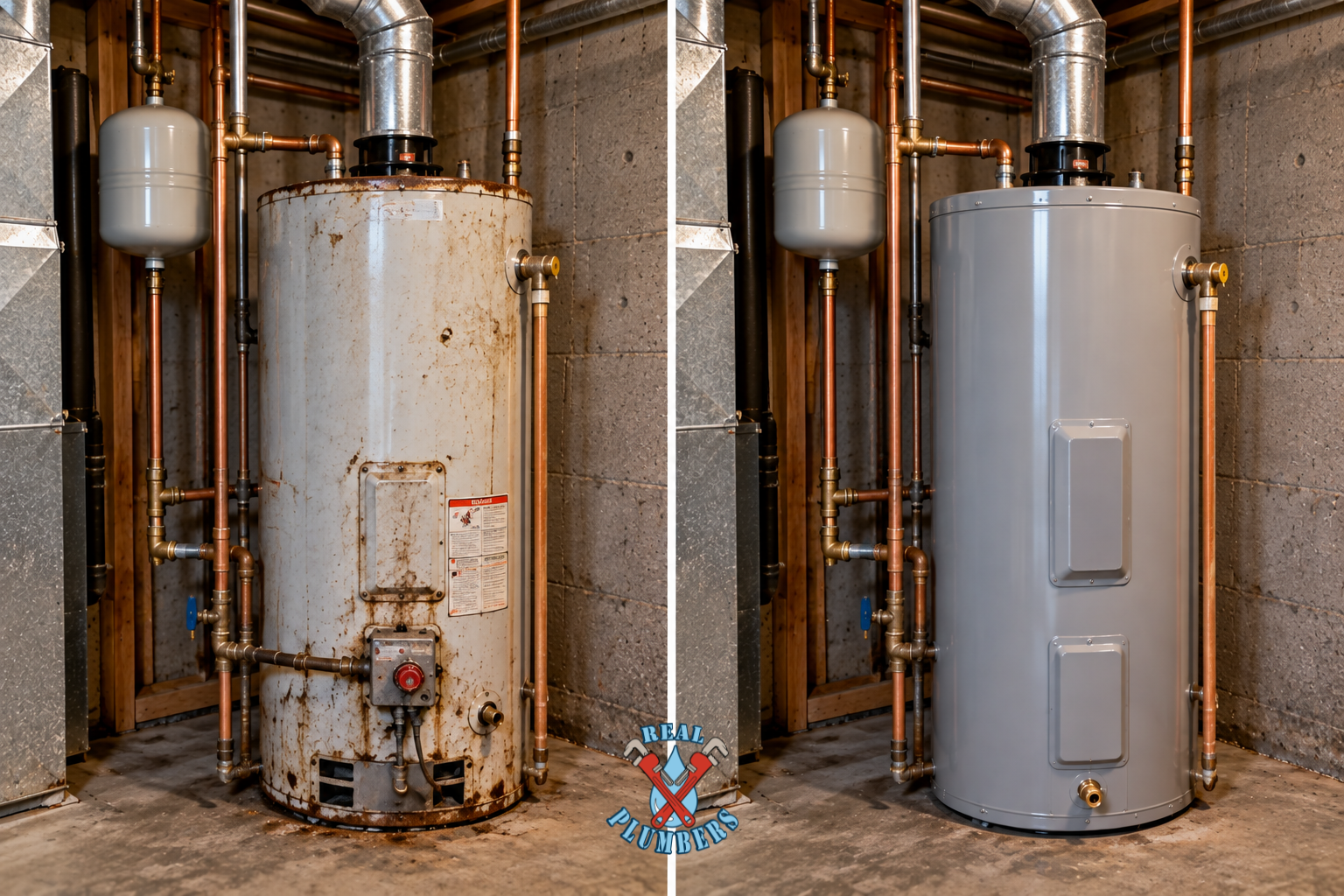
Replacement becomes more attractive when the heater is near the end of its lifespan, has recurring leaks, or has needed multiple repairs in a short period. Rust, tank corrosion, and significant sediment buildup are all warning signs that the system may be declining. In those cases, replacement often delivers better value than continued patchwork repairs.
It's also worth replacing a unit if you want to move into a more efficient category, such as tankless or heat pump technology. The monthly savings, improved convenience, and longer life expectancy can make the investment worthwhile. A new unit can also reduce the risk of emergency failures that interrupt daily routines.
Practical Tips to Get the Most from a Modern Water Heater
Set the temperature wisely.
Most households do well with a water heater setting around 120 degrees Fahrenheit. That temperature is usually hot enough for comfort while helping reduce energy waste and scalding risk. Higher settings may be needed in some cases, but they should be chosen carefully.
A proper temperature setting also supports system longevity. When the water is set unnecessarily high, the heater works harder than it needs to, which can increase wear. A plumber can help confirm the right setting for the property and household needs.
Schedule preventive maintenance
Annual maintenance is one of the simplest ways to protect your investment. Tank systems should be flushed to remove sediment, while tankless units often need descaling based on water quality and usage. Filters, valves, and venting components should also be checked regularly.
If your unit is already underperforming, don't wait until it fails. Early service can often restore efficiency before major damage occurs. In many cases, preventive care costs far less than emergency replacement.
Choose a plumber who understands modern systems.
Not every plumbing contractor has the same level of experience with newer equipment. Tankless, condensing, and heat pump systems have different installation requirements and maintenance needs. Choosing a plumber with current product knowledge can make a major difference in long-term results.
At Real Plumbers, we help customers compare options, troubleshoot issues, and install systems that are built to perform. If you're ready to improve your hot water experience, explore our tankless installation options or speak with our team about the best upgrade for your property. We also support related plumbing needs, from water leak repair to broader system evaluations, so your plumbing works as a complete system rather than a collection of separate parts.
Final Thoughts: Efficiency and Convenience Can Work Together
Modern water heaters are more than a replacement for older equipment. They're a way to lower energy use, improve comfort, save space, and reduce the hassle of daily hot water management. From heat pump systems to tankless units to high-efficiency condensing models, today’s options give homeowners and businesses far more control than they had in the past.
If your current water heater is aging, inefficient, or difficult to maintain, now is the right time to evaluate your options. A professional assessment can help you choose the most practical solution based on your budget, property layout, and hot water demand. For dependable guidance and installation support in Los Angeles, contact Real Plumbers and take the first step toward a more efficient, convenient hot water system.