Why Your Water Heater Isn’t Working (And What It Could Be)
There’s nothing quite like expecting a hot shower and getting a cold surprise instead. When your water heater isn’t doing its job, it could be anything from a minor tweak to a major fix, or even a sign it’s time for a new one. If you’re looking for a starting point, our water heater repair service can help you figure out what’s wrong before it becomes a bigger hassle.
Knowing the warning signs can save you from unexpected cold showers and costly repairs. Water heaters often give little hints before they completely stop, like strange noises, temperature swings, or rusty water. For tips on safe and energy-efficient water heating, the U.S. Department of Energy has some great resources at Energy Saver.
We’ll dive into the common reasons your water heater might be on the fritz, how to tell if you’re dealing with a small hiccup or a bigger issue, and when it makes sense to repair or replace it. We’ll also share some maintenance tips to help your heater last longer and avoid unexpected breakdowns. If your heater keeps failing, our water heater replacement team can help you weigh your options.
Start With the Symptoms: What Is Your Water Heater Telling You?
No Hot Water at All
If you’re getting zero hot water, it’s probably a power issue, an ignition problem, or something with the thermostat. Electric heaters might have a burnt-out heating element or a tripped breaker. Gas heaters could have issues with the pilot light, burner assembly, or gas supply. It’s more than just a nuisance when there’s no hot water at all.
A quick check of your electrical panel, gas connections, and thermostat settings can sometimes show you what’s up, but it’s not always the full answer. If it’s still not working after a basic reset, it might be an internal problem that needs special tools to fix. The Centers for Disease Control and Prevention also advises being careful with fuel-burning appliances and carbon monoxide risks, especially if your gas appliance is acting weird.
Hot Water Runs Out Too Fast
If your hot shower turns cold too quickly, your heater might not be keeping up. Sediment buildup, a low thermostat setting, a failing heating element, or just an undersized tank could be the culprit, especially in busy households.
The real issue might be that your heater can’t keep up with demand. Sediment at the bottom of the tank acts like insulation, reducing efficiency and making the heater work harder than it should.
Water Is Leaking Around the Tank
Never ignore water leaks. They can quickly escalate from a minor drip to serious structural damage. Leaks might come from fittings, valves, or even from tank corrosion. If the leak is near the top, it might be fixable. But leaks near the bottom usually mean the tank is done for.
If you spot water around the base of the heater, find the source ASAP. Don’t assume it’s just condensation. Persistent leaks can damage your floors, walls, and nearby utilities, and if it’s a gas unit, it could be a safety hazard. For help with water damage, our water leak repair service can prevent a small problem from becoming a big one.
The Most Common Reasons Water Heaters Fail
Thermostat Problems
The thermostat sets the water temperature. If it’s broken or messed up, you can end up with water that’s too cold, too hot, or inconsistent. A drifted thermostat can cause the heater to cycle on and off too quickly, wasting energy and wearing it out faster. Checking the temperature setting is a good first step.
Most experts suggest a setting around 120°F for safety and efficiency. This balance prevents scalding while providing enough hot water for household needs. For more on temperature management, the U.S. Consumer Product Safety Commission has helpful info.
Heating Element or Burner Failure
Electric heaters use heating elements, while gas heaters rely on burners. If these fail, the heater won’t produce enough heat. In electric models, a dead element can cause specific issues, like hot water running out too fast.
Gas heaters might have pilot light issues, clogged burners, or ignition system failures. These need checking because even if the heater powers on, it might still not heat water properly. Sounds like popping or delayed ignition means it’s time for a check.
Sediment Buildup in the Tank
Sediment buildup is a sneaky cause of poor heater performance. Over time, minerals settle at the bottom, especially in hard-water areas like Southern California. This reduces tank capacity, increases noise, and uses more energy.
As sediment hardens, it can create popping sounds as water bubbles through. It also coats heating elements, reducing their efficiency. Regular flushing is an easy way to prevent this and extend your heater’s life.
Corrosion and Aging Components
Water heaters don’t last forever, and corrosion is a big reason why. Over time, parts like the anode rod and tank lining wear out. When corrosion hits the tank, repairs are less reliable.
If you see rust-colored water, repeated leaks, or an old heater, it might be time to replace it. Most last 8 to 12 years, but hard water, heavy use, and skipped maintenance can shorten their lifespan.
What Strange Noises, Smells, and Water Colors Mean
Popping, Rumbling, or Crackling Sounds
Weird noises often mean sediment buildup or stress on components. Popping happens when water gets trapped under hardened mineral deposits and escapes as steam bubbles. Rumbling suggests a heavy sediment layer shifting in the tank.
These noises aren’t just annoying; they hint that your heater’s efficiency is dropping. If it’s gotten louder over time, have it checked before it damages more components.
Smelly Water or a Rotten Egg Odor
A sulfur smell usually means bacteria inside the tank, often involving the anode rod. Not every smell is dangerous, but it’s a sign that maintenance is needed. Sometimes flushing and replacing the anode rod can fix it, but a persistent odor might point to water quality issues.
If the smell is stronger with hot water, the tank could be the source. If it doesn’t go away after maintenance, have a plumber check the tank and water chemistry.
Rust-Colored or Cloudy Water
Rusty water often signals corrosion in the tank or plumbing. If it’s temporary after maintenance, it might just be sediment. If it’s regular, the tank may be deteriorating.
Cloudy water might be air in the system, but if it’s with rust or a metallic smell, get it checked. A pro can tell if it’s the heater, supply lines, or another fixture. Sometimes, related issues like a faulty faucet repair or pressure imbalance can make water quality seem worse.
Repair or Replace: How to Make the Right Decision
When Repair Makes Sense
Repair is often best when the heater is fairly new, the problem is isolated, and the tank is still in good shape. Replacing parts like a heating element or thermostat can restore function without a full upgrade. If it’s been reliable until now, repair might be the way to go.
Professional diagnosis is key because similar symptoms can have different causes. Getting it right avoids unnecessary replacements and gets you back to normal sooner.
When Replacement Is the Better Investment
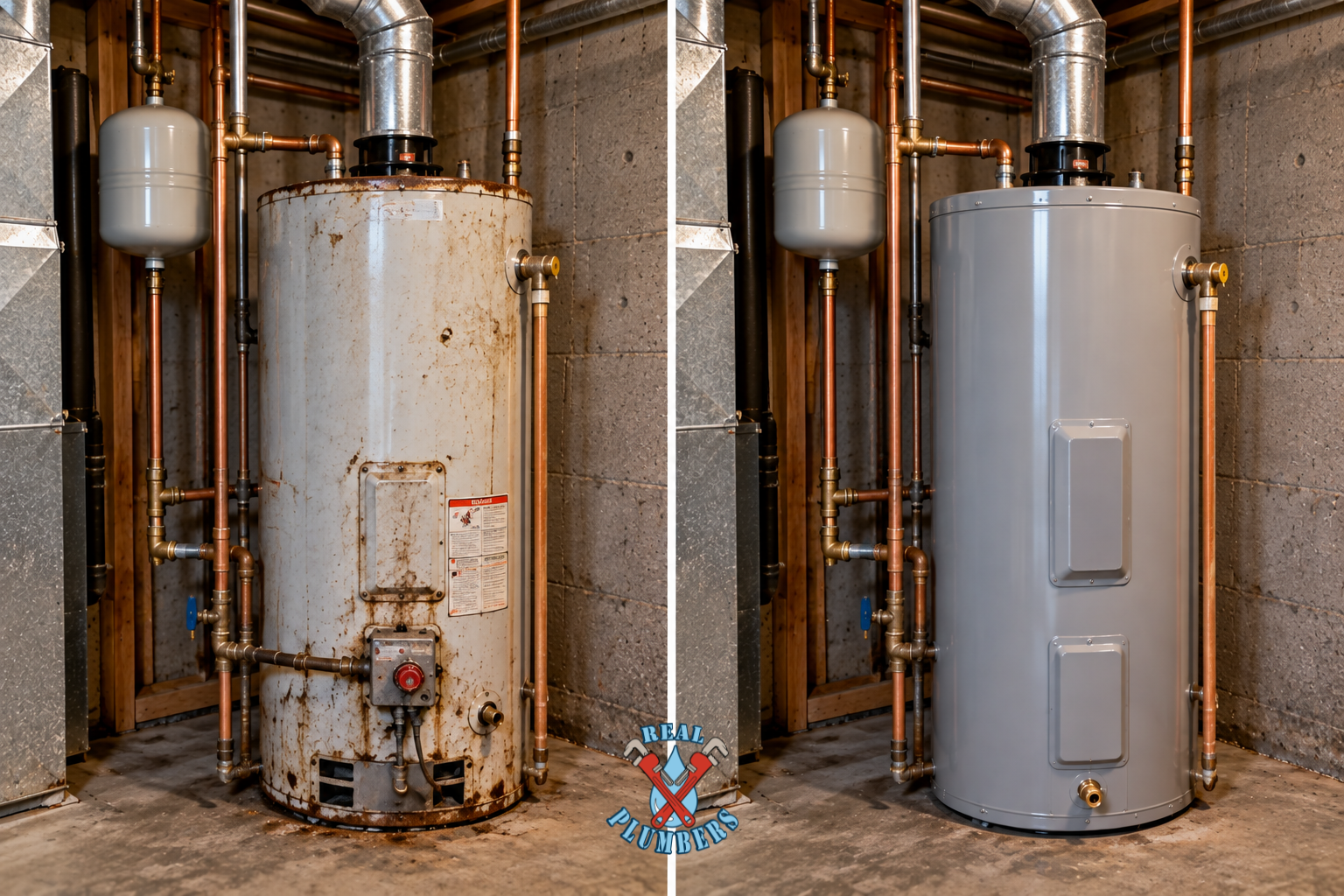
If your heater is older, leaking, or constantly needs repairs, replacement might be smarter. Older heaters can become inefficient and unpredictable. Spending on repairs might not be worth it.
Newer systems are more energy-efficient, which can make replacement appealing even before a failure. If you’re considering upgrades, tankless water heater installation can offer continuous hot water and save space.
Age, Frequency of Repairs, and Performance
The simple rule is to consider age, repair history, and performance. A heater that’s 8-12 years old and showing leaks, noise, and inconsistent output is likely closer to replacement. On the other hand, a newer unit with one issue can often be fixed easily.
Compare the repair cost to the heater’s remaining life. If the repair is costly and the heater is old, replacement is usually the better value, especially if your hot water demand has increased.
How to Prevent Water Heater Problems Before They Start
Flush the Tank Regularly
Flushing your water heater once a year is a great way to keep it running smoothly. It gets rid of sediment, improves performance, reduces noise, and lowers system strain. In hard-water areas, more frequent flushing might be needed.
The U.S. Environmental Protection Agency’s WaterSense program also highlights water efficiency and plumbing upkeep. A clean tank is more efficient and reliable. If you’re not comfortable doing it yourself, a plumber can help.
Inspect the Anode Rod and Valve Components
The anode rod protects the tank from corrosion, so checking it every couple of years can really help. If it’s heavily worn, replacing it can slow corrosion and extend the heater’s life. This is often overlooked until problems arise.
Check the temperature and pressure relief valve too. This is a crucial safety device. If it fails, the system might not release pressure properly. Even though it’s a small part, it plays a big role in safety.
Set the Right Temperature and Watch Water Quality
Keeping the thermostat around 120°F usually works for most homes and prevents unnecessary wear. Higher settings increase energy use and scalding risk, while lower ones might not meet needs. Check the settings after maintenance or power outages.
Water quality is important too. Hard water can cause scale buildup, shortening heater life and reducing output. A water softener or treatment could help in these cases. If you notice pressure changes or fluctuating flow, water pressure regulator repair might reduce plumbing strain.
Special Considerations for Los Angeles Homes
Hard Water and Mineral Buildup
Hard water is common in Los Angeles and can speed up problems that shorten the water heater's life. Mineral scale builds up on heating surfaces, settling in the tank and affecting recovery time and noise levels. Over time, this makes a heater seem older than it is.
Because of these conditions, local homeowners should pay attention to flushing and water quality solutions. A softener or filtration system can slow buildup and make maintenance more effective.
When Plumbing System Issues Affect the Heater
Sometimes the heater isn’t the only issue. Low pressure, worn valves, or partial blockages can affect hot water flow. A clogged line or drainage problem might make the heater seem unreliable when it’s really a plumbing issue.
If you have slow drains, weak shower pressure, or repeated fixture issues along with hot water problems, the heater might be part of a bigger plumbing issue. Services like clogged up drains and shower valve repair might be needed alongside heater service.
When to Call a Professional Plumber
Signs the Problem Is Beyond DIY
Call a pro if you see active leaks, smell gas, hear loud noises, or can’t restore hot water after basic checks. Also call if it’s making discolored water, tripping breakers, or leaking from the bottom. These signs point to bigger issues than a homeowner should tackle alone.
Licensed plumbers have the tools to test electrical, gas, and plumbing components accurately. They can tell if it’s fixable, spot hidden damage, and help you avoid unnecessary replacement.
How Professional Service Protects Your Home
A pro inspection does more than restore hot water. It checks for safety issues, installation problems, and signs of broader plumbing wear. This includes valve concerns, pressure irregularities, and venting problems in gas units.
If you want long-term reliability instead of a quick fix, professional maintenance is the way to go. Real Plumbers offers full-service support for water heaters, leak detection, and plumbing repairs to match the solution to the real issue. For urgent leaks or a heater that’s stopped, our water heater repair team is ready to help.
Frequently Asked Questions About Water Heater Problems
Why is my water heater making noise but still working?
Noise usually means sediment buildup or internal wear. It might still heat water now, but efficiency is dropping. Fixing it sooner can prevent more expensive damage later.
Can I keep using a leaking water heater?
It depends, but it’s rarely a good idea to ignore it. A leak from a fitting or valve might be repairable, but a tank leak usually means replacement. Have it checked to prevent water damage.
How long should a water heater last?
Most tank-style heaters last around 8 to 12 years, though maintenance can help them last longer. Heavy use, hard water, and skipped flushing can shorten the lifespan. Consider replacement if it’s in that age range and failing often.
What is the easiest maintenance step I can do?
Flushing the tank is one of the easiest and most valuable maintenance steps. It removes sediment and can improve noise, heating speed, and efficiency. A plumber can help if you’re unsure how to do it safely.
Final Thoughts: Fix the Problem Early and Protect Your Hot Water
A faulty water heater isn’t just an inconvenience; it often hints at a bigger problem. Whether it’s a thermostat issue, sediment buildup, a leaking valve, or an aging tank, addressing it quickly can prevent bigger repairs and household disruptions. Pay attention to early symptoms and treat them as clues rather than annoyances.
Often, the best outcome comes from matching the solution to the real cause. Some problems need simple repairs, others maintenance, and sometimes replacement is the practical choice. If you’re in Southern California and want a clear answer from an experienced team, Real Plumbers can help with diagnosis, repair, and replacement options tailored to your home.
For reliable service, honest advice, and long-term plumbing support, check out our water heater repair and water heater replacement services, or contact us to schedule an inspection today. Taking action now can restore your hot water quickly and help prevent future issues.